


Often patients try to treat varicose veins with folk remedies at home - based on plant extracts, there are even preparations for external and oral use, many of which are positioned as means to completely get rid of venous diseases.They are widely advertised and sold without a prescription.But, unfortunately, this attitude towards traditional methods in the case of varicose veins is not entirely correct.
Phlebologists do not consider traditional methods to be the main method of treating varicose veins of the lower extremities - traditional medicine can be effective in complex therapy and can only reduce symptoms.
Why doesn't herbal medicine cure varicose veins?
The use of various herbal remedies is not able to relieve the patient from varicose veins even in the initial stages of the disease.This cannot be achieved by drug therapy and other conservative methods recommended by official medicine.
Changes in the walls of varicose veins are irreversible.And not a single product of natural or pharmaceutical origin can eliminate these characteristic disorders or at least reliably stop their progression.Currently, there are no drugs that lead to the regression of phlebosclerosis and the restoration of the normal structure of the vascular wall.
In many cases, patients have a hereditary predisposition to varicose veins in the lower extremities.
Factors for the development of varicose veins:
- Genetically determined “weakness” of the venous walls, which in fact can only withstand a normal level of intravascular pressure without consequences.
- A small number of intravenous valves are present in the uterus, which may be a familial or even racial trait.
Of course, all of this cannot be eliminated with the help of herbal remedies or other non-surgical techniques.Therefore, there is no need to talk about curing varicose veins with the help of conservative therapy, no matter what advertising and publications promise.
Improvement in the condition while using medications or herbal remedies only indicates compensation for existing venous insufficiency.The length of this period of remission depends on many factors.And the continuation of herbal medicine does not in any way guarantee a low probability of resumption of symptoms and prevention of the development of complications.
However, herbal products can still be used in the complex treatment of varicose veins of the lower extremities.In addition, some healing extracts have formed the basis of several modern medicines.So, patients may refuse to independently prepare decoctions and infusions for oral administration.Many people prefer standardized pharmaceutical products, with adjusted dosage, ease of administration and predictable action.
What is the effect of herbal medicine and traditional methods?
For varicose veins, chamomile, horse chestnut, aromatic rue, horsetail, dandelion, meadow lumbago (sleep grass), bird's knotweed (knotweed) and a number of other plants are most often used for medicinal purposes.
Chamomile helps to alleviate the symptoms of varicose veins in the early stages - it reduces the inflammatory process and the visibility of affected veins.Chamomile tea and compresses have a minimum of contraindications and can be recommended by specialists in complex therapy.
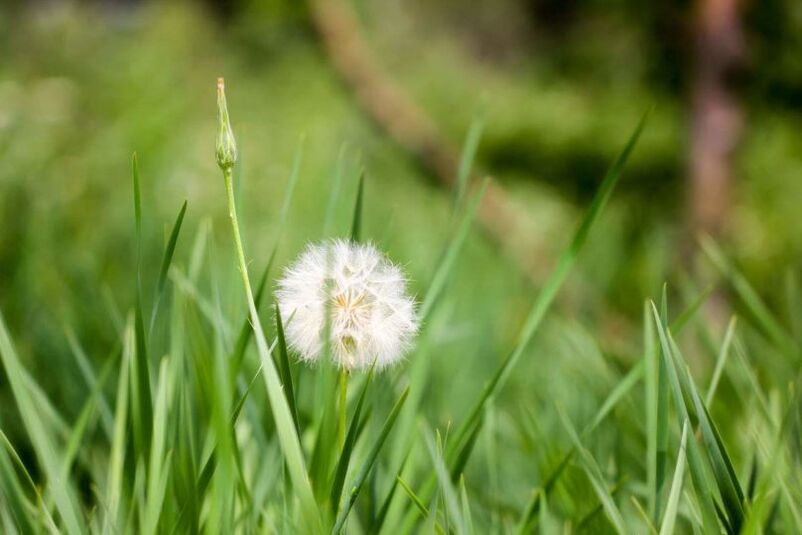
Dandelion is a popular remedy for varicose veins.Dried roots and stems are added to tea and also in baths.Relieves mild pain, but has no therapeutic effect.
The effect of folk remedies
Herbal medicines have a limited effect on affected veins:
- Phlebotonic effect - increasing vein tone.But do not forget that with varicose veins the structure of the affected vessels changes irreversibly.In its walls, not only the amount of connective tissue increases significantly (which is called phlebosclerosis), but the structure of the muscle layer is also disturbed.Therefore, already deformed veins will give insufficient response to phlebotonic substances.Its lumen can be narrowed mainly with the help of potent compounds - for example, ergot alkaloids.But the side effects of this herbal medicine will be significant.Therefore, phlebotonic plants are used to reduce the severity of venous insufficiency and for preventive purposes.
- Compaction of the vein, due to which the process of its deformation is somewhat restricted.This effect can be used in complex prevention in at-risk individuals.But it still won't be possible to stop, let alone reverse, existing varicose veins this way.
- Antithrombotic and disaggregating effect, which reduces the risk of thrombosis and has a beneficial effect on microcirculation.But this effect can only be expected with the use of decoctions and infusions for a sufficiently long period.Furthermore, blood thinning will not occur locally in the area of varicose veins, but throughout the body.In some patients, this can lead to complications from other diseases.
- Anti-inflammatory and healing effect, manifested mainly in local herbal medicine for trophic ulcers and eczematous venous dermatitis.But without eliminating venostasis (the main cause of these complications), it will not be possible to achieve a lasting normalization of the skin condition.
As you can see, the symptoms of the disease will only temporarily subside, and varicose veins will not disappear completely.
Apitherapy for varicose veins
Apitherapy or “bee therapy” is the use of bee venom and various bee products for medicinal purposes.Recommendations for the use of honey and propolis as compresses for trophic ulcers and the presence of visible varicose veins are quite common.Some also resort to apitoxin therapy sessions, deliberately getting bee stings in the projection of the most affected vessels.
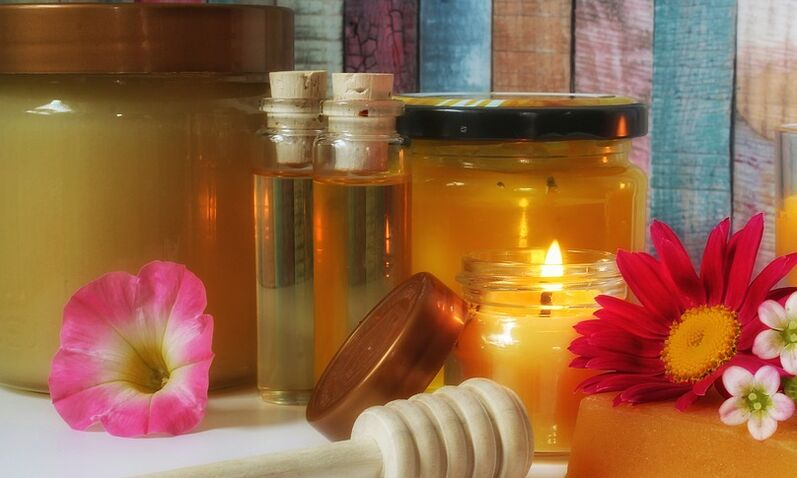
Honey and propolis in the form of compresses are used to relieve swelling and pain.
Apitherapy is a classic popular method of treating varicose veins on the legs, let's consider the expected effect and the possibility of its occurrence:
- Improve tissue trophism and provide them with vitamins and microelements contained in honey.In reality, there is no improvement - the penetration of components through the skin is insignificant to speak of a significant therapeutic effect.In addition, a dense mass of honey can clog pores and thereby worsen the condition of the dermis.
- In the presence of a trophic ulcer - antimicrobial effect of applying honey compresses.The highly digestible carbohydrates in this beekeeping product can become a breeding ground for opportunistic microorganisms.This can lead to exactly the opposite effect, especially in conditions of skin dysbiosis that occurs with varicose veins and against the background of a decrease in local immunity.
- Anti-inflammatory effect of honey compresses.Yes, honey can reduce the severity of nonspecific inflammation.However, in the case of varicose veins, important changes occur in the wall of the subcutaneous vessel and the biologically active substances through the skin are not yet sufficiently absorbed.Honey is a highly allergenic product;It is possible that local allergic reactions similar to inflammation may occur - this will not improve the condition of the legs.
- Combating thrombosis (with apitoxin therapy), explained by the presence of a substance similar to hirudin in bee venom.Trying to use this effect, apitherapists often plant bees with stingers in the areas of veins affected by thrombophlebitis.In some cases, this activates thrombolysis (blood clot reabsorption).But such an aggressive and not fully controlled effect can cause thromboembolism and increase the severity of phlebitis.
- Improving microcirculation under the influence of peptides contained in bee venom.In fact, these biologically active substances contribute to the expansion of capillaries and blood flow to inflamed areas after bee stings.Bee sting sessions can potentially improve the condition of the soft tissues of legs affected by varicose veins.But apitoxin therapy is also accompanied by inflammation and swelling, which aggravates existing disorders.The wounds formed after removing the bite serve as entry points for bacteria - risk of developing erysipelas and other very undesirable infectious complications.
- Restoration of venous walls under the influence of bee venom.The peptides and other substances it contains, with repeated bites, alter all tissues in the area where inflammation develops.The skin becomes thicker, the subcutaneous tissue becomes thicker, the walls of the subcutaneous vessels become thicker, and varicose veins become less visible.But this does not mean that irregular phlebosclerosis and nodular deformities of the veins arising against its background completely disappear.They are only compensated, which is accompanied by a temporary stabilization of the course of chronic venous insufficiency.And valve sclerosis is not eliminated by apitherapy.
Apitherapy is indeed a very powerful means of traditional medicine, but in the case of varicose veins it is fraught with the development of infectious complications.It will not be possible to restore the vein walls with this treatment;it is only possible to stabilize the course of the disease and alleviate the symptoms.
Do leeches treat varicose veins?
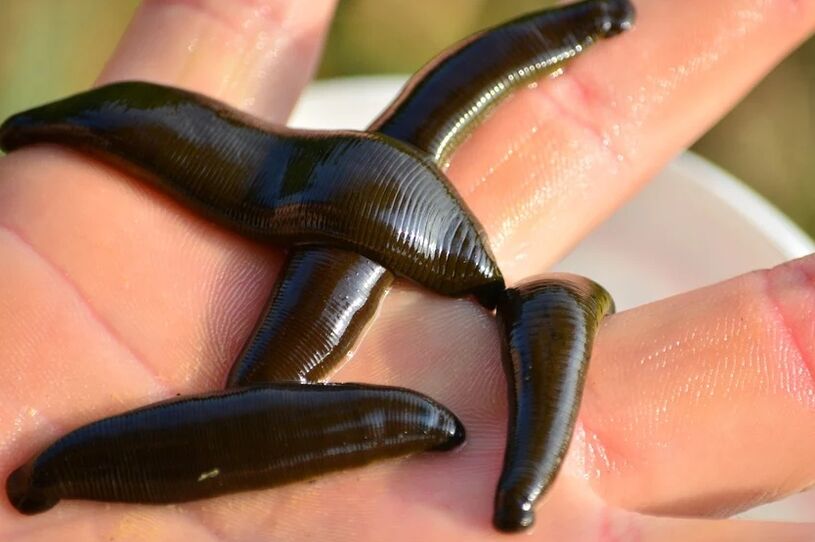
Leeches have long been used to treat blood and vascular diseases.The risk of thrombosis is reduced and pain is temporarily reduced.
Leech treatment (hirudotherapy) is a popular method of treating varicose veins and other vascular diseases, eliminates symptoms, improves tissue trophism, but the effect is limited in time:
- Reduced swelling and visible pigmentation.
- Sucking a leech reduces the risk of thrombosis.This is explained by the antithrombotic effect of several substances present in their saliva: the anticoagulant hirudin, the enzymes collagenase and apyrase with disaggregating properties.But the leech cannot act on blood clots already existing in the veins and does not reduce the likelihood of thromboembolism in thrombophlebitis.Furthermore, the proteins coming from your saliva break down quickly, so you cannot expect a long-term antithrombotic effect from hirudotherapy.
- Sucking blood by a leech reduces intravascular pressure.This discharge of local blood flow is temporary and is not capable of relieving the patient from venous stagnation with varicose veins.
- Some substances in leech saliva have a vasodilatory effect and lead to the dilation of small vessels.In some cases, this helps improve microcirculation.Venous insufficiency caused by varicose veins is accompanied by excessive extension of the end sections of the venous network due to blood stagnation.Therefore, further expansion of small vessels may not have the best effect on the state of the microvasculature.In spider veins, this effect of using leeches can even make the situation worse.
Hirudotherapy currently refers more to physiotherapeutic methods than to traditional ones.But phlebologists are still very cautious about this treatment due to the high probability of complications - erysipelas.
The venous congestion that develops with varicose veins leads to interruption of nutrition to all tissues of the limb, including the skin.The efficiency of local immune factors decreases, the composition of the microflora on the surface of the epidermis changes.All this is a prerequisite for the development of infectious complications.
The suction of leeches further disrupts the functioning of the skin barrier.And the wound opened after its separation can even become an entry point for pathogenic and opportunistic bacteria.And the most likely infectious complication of hirudotherapy will be erysipelas.Furthermore, proteins from leech saliva are foreign to the human body and can potentially act as allergens.
Hirudotherapy cannot relieve varicose veins of the lower extremities or lead to sustainable compensation of venous insufficiency.Increases the risk of infectious dermatitis and erysipelas.
How to deal with the disease?
Any conservative therapy for varicose veins provides only symptomatic relief.The main effect is aimed at reducing the severity of venous stagnation and correcting complications.No conservative technique can prevent disease progression and eliminate the main cause of chronic venous insufficiency.
Self-medication is dangerous!
A late visit to the doctor and self-medication for varicose veins significantly increase the likelihood of complications:
- Thrombosis of superficial and deep veins with possible development of thromboembolism.The migration of blood clots closes the arteries, which can cause myocardial infarction, stroke and disruption of the functioning of many organs.Pulmonary embolism is one of the most lethal conditions.
- Trophic ulcer, prone to chronicity and recurrence.
- Venous eczema is a severe and prolonged dermatitis with an infectious-allergic basis.It significantly worsens the quality of life and can be complicated by erysipelas.
- Spontaneous ruptures of varicose veins with risk of blood loss.
In hospitals, varicose veins are treated surgically - the entire affected vessel and its main tributaries are removed (or completely disconnected from the bloodstream).As a result, the patient eliminates pathological blood discharges, eliminates venous stagnation and improves tissue nutrition.
Currently, patients have the opportunity to choose equally effective minimally invasive intravenous interventions instead of classical operations.These include:
- EVLO is the obliteration of the affected vein (i.e., irreversible closure of its lumen) after intravascular laser treatment.
- RFO is an obliteration caused by exposure to radiofrequency waves.
- Sclerotherapy is the introduction into the lumen of a vessel of a special sclerosing medication, which causes adhesion and subsequent obliteration of the vein.
The treatment method is selected according to indications, taking into account the stage of varicose veins and the presence of concomitant diseases.Uncomplicated varicose veins are usually eliminated with sclerotherapy or RFO, while advanced varicose veins can be eliminated with laser technologies. Laser treatment of varicose veins gives excellent results at any stage of the disease.